
You may have walked away from your Springfield car crash thinking you were lucky, only to realize weeks or months later that your brain just does not feel the same. Maybe you lose your train of thought at work, forget simple things, or feel overwhelmed by noise at the grocery store on South Campbell Avenue or Sunshine Street. You might even wonder if you are imagining it, especially if the emergency room sent you home with a “mild concussion” diagnosis.
At Bishop & Hayes P.C., we focus solely on auto accident recovery, and we bring nearly 50 years of combined experience to cases where a concussion or traumatic brain injuries turned into long-term, life-changing problems. We regularly meet Springfield clients who were told everything looked normal on their scans, yet months later, they cannot think or feel like themselves. In this guide, we want to explain how long-term brain injuries really work, how they affect your life in Springfield, and how to protect your legal rights before an insurance company pushes you into an unfair settlement.
Brain injuries often require lifelong medical care and support. Let a proven lawyer at Bishop & Hayes P.C. fight for the compensation you’ll need long‑term. Call (417) 304-3228 today.
Why Long-Term Brain Injuries Are So Common After Springfield Auto Crashes
Even crashes that seem minor can cause serious and lasting brain injuries, particularly in auto collisions around Springfield, where sudden forces act on the head and neck.
- Sudden Vehicle Movement and Brain Motion: In a rear-end collision, such as on Battlefield Road, a vehicle may be pushed forward abruptly while the head and neck lag behind and then snap back. The brain, which is soft and suspended in fluid, can move inside the skull and strike the bony interior, stretching and damaging delicate brain cells even without a direct head impact.
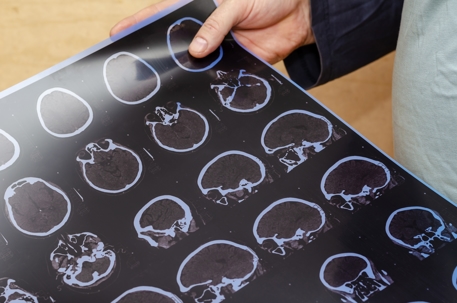
- Limits of Standard Imaging: CT and MRI scans used in Springfield emergency departments are designed to detect bleeding, fractures, and major swelling. They often do not reveal microscopic nerve damage, sometimes referred to as diffuse axonal injury, or chemical changes that disrupt how brain cells communicate. This can explain why symptoms persist even when scans appear normal.
This pattern appears repeatedly in auto collisions throughout southwest Missouri, whether on I‑44 near Glenstone, in busy parking lots, or on rural roads outside Springfield. Because Bishop & Hayes P.C. focuses exclusively on auto accidents, we understand how the forces involved in these crashes commonly lead to long-term brain injury and how to clearly explain that connection to insurers in relation to ongoing symptoms.
Cognitive Changes That Can Quietly Reshape Daily Life
One of the most frustrating aspects of a long-term brain injury is how it quietly changes the way you think and function in everyday life.
You may notice difficulty focusing on tasks that were once routine. It may take more effort to read a simple email or complete a school assignment, and you might forget why you walked into another room or lose track of what you were doing.
These experiences are signs of changes in several cognitive areas:
- Attention: The ability to stay focused on a task without becoming distracted.
- Memory: The ability to retain new information, such as instructions from a supervisor or upcoming appointments.
- Processing speed: How quickly you take in information and respond, such as listening to a customer while entering data into a computer.
- Executive function: Skills like planning, organizing, and switching between tasks, which are essential in many Springfield-area jobs, including healthcare, construction, and administrative work.
In daily life, these changes may show up as increased mistakes on a production line, forgotten training steps at a warehouse in North Springfield, or the need for repeated reminders at an office job on East Sunshine. You might feel behind in conversations or avoid social situations because keeping up with multiple people talking at once is exhausting. Although you may look fine outwardly, your brain may be working much harder just to get through the day.
Neuropsychological testing performed by a psychologist trained in brain function can measure these issues by comparing your abilities to expected levels for your age and background. Many people feel relief when problems they sensed but could not fully describe are clearly reflected in formal test results. When handling a long-term brain injury case in Springfield, we pay close attention to these cognitive changes and work with treating providers or trusted medical professionals to document them, as this documentation is critical to showing how the injury affects your ability to work and function now and in the future.
Emotional and Behavioral Shifts After a Brain Injury
Changes in mood and behavior can be just as disabling as thinking problems, and sometimes even more distressing for families. After a brain injury, you might notice that you cry more easily, feel anxious in situations that never bothered you before, or get irritated over small frustrations. You might snap at loved ones, then feel guilty and confused about why you reacted so strongly. Some people describe feeling like their personality has shifted in ways they cannot control.
These changes are often directly related to the injury, not simply a response to stress. Areas of the brain that help regulate emotion and impulse control can be affected by the forces of a car crash. When those regions are injured, it becomes harder to put the brakes on a strong reaction or to bounce back from minor setbacks. Depression and anxiety are common after traumatic brain injury and may appear weeks or months after the collision, especially as you realize how much your life has changed.
When we build a long-term brain injury case, we treat emotional and behavioral changes as real, significant harms, not as just stress. We listen carefully to both our clients and their families to understand how these shifts are affecting relationships, parenting, and overall quality of life. That information helps us seek fair compensation for the mental anguish, loss of enjoyment of life, and future counseling or psychiatric care that may be needed, especially when symptoms persist long after the wreck.
Physical Symptoms That Linger Long After the Crash
For many people, physical symptoms are the first sign that something is still wrong after a crash. These symptoms can persist long after the initial injury and interfere with daily life.
- Persistent headaches and sensory sensitivity: Ongoing headaches are very common after a brain injury and can range from a constant dull ache to severe migraines that require lying down in a dark room. Dizziness, balance problems, and constant ringing in the ears are also common. Bright lights, busy visual patterns, and loud noises may suddenly feel overwhelming.
- Sleep disturbances and fatigue: Sleep problems frequently follow long-term brain injuries. Some people struggle to fall asleep or wake repeatedly during the night, while others sleep much more than before but still feel unrefreshed. Poor sleep often worsens headaches, irritability, and concentration difficulties, creating a cycle that is hard to break and makes maintaining work or family responsibilities more difficult.
- Post-concussion syndrome: When these symptoms last beyond the usual recovery period, doctors may refer to the condition as post-concussion syndrome. While many people improve within weeks, a significant number continue to experience symptoms for months or longer. Lingering effects are common and should not be dismissed, especially when they clearly began after a specific auto collision in or around Springfield.
- Limits on work and daily environments: Physical and sensory symptoms can make certain environments intolerable. Jobs involving fluorescent lighting, long drives on I‑44, or constant noise may no longer be possible. In long-term brain injury claims, we closely examine how these limitations affect daily life.
At Bishop & Hayes P.C., we work with neurologists, physical therapists, and other medical professionals to document headaches, dizziness, balance issues, and sleep disturbances. This documentation is essential to support claims for ongoing treatment, medication, vestibular therapy, and future care needs.
How Long-Term Brain Injuries Affect Your Job, Income, and Independence
When cognitive, emotional, and physical changes combine, the effect on work life can be substantial. Someone who once succeeded in fast‑paced jobs in Springfield—such as healthcare, delivery driving, or retail management—may struggle to keep up with demands. They may miss safety steps, forget instructions, or need frequent breaks due to headaches and fatigue.
Although some employers can temporarily modify duties, this is not always possible. Many people end up in lower‑paying roles, working fewer hours, or leaving the workforce entirely. Even those who continue working often do so at a high personal cost, returning home exhausted and unable to fully engage with family. Over time, this reduced ability to work becomes a significant financial loss.
The law allows recovery not only for past lost wages, but also for loss of earning capacity, which reflects how an injury affects future income. In a long‑term brain injury Springfield case, this involves comparing pre‑crash work with current limitations, education, experience, and realistic job opportunities.
Loss of independence also plays a role. If driving is unsafe or daily tasks such as managing finances, medications, or household responsibilities require help, family members may need to step in. These unpaid roles have real value and can be included in a claim.
Because Bishop & Hayes P.C. focuses exclusively on auto accidents, we regularly handle cases involving these long‑term economic and practical losses, working to clearly show how a brain injury has changed a person’s earning power and independence.
Why and How Insurance Companies Often Undervalue Long-Term Brain Injury Claims
Insurance companies often undervalue long‑term brain injury claims because these cases involve high potential costs and symptoms that are not always obvious on early testing.
- Overreliance on early medical records: Adjusters frequently focus on initial emergency records. If an early CT scan at a Springfield hospital was normal and notes mention a “mild” concussion with expected improvement, insurers may treat that snapshot as the full story and disregard later records showing persistent headaches, memory issues, or depression.
- Misuse of the term “mild”: Insurers often emphasize the word mild to suggest the injury does not justify long‑term treatment or significant compensation. They may point to notes stating you were alert, oriented, or not in visible distress, while downplaying ongoing symptoms.
- Questioning ongoing symptoms: Another common tactic is attributing continued problems to stress, age, unrelated health conditions, or exaggeration rather than acknowledging the lasting effects of the crash.
- Pressure to settle early: Adjusters may offer a quick settlement soon after a crash on roads like the Kansas Expressway or Glenstone. These early offers often fail to account for future medical care, therapy, lost earning capacity, or prolonged symptoms, and accepting them usually prevents seeking additional compensation later.
Because our founders previously worked in insurance defense, Bishop & Hayes P.C. understands how insurers evaluate records and minimize claims. In long‑term brain injury cases in Springfield, we use that insight to challenge narrow reliance on early records and push for recognition of the full, ongoing impact of the injury.
Protecting Your Long-Term Brain Injury Claim in Springfield
If you suspect a long‑term brain injury after an auto accident in Springfield, taking early, practical steps can protect both your health and your legal rights.
- Continue medical care and report all symptoms: Keep seeking treatment and be honest with providers about every symptom, including headaches, memory issues, mood changes, sleep problems, and difficulties at work or home. These details help create accurate medical records.
- Document changes over time: Keep a simple journal noting daily symptoms, severity, and how they affect your activities. Ask family members to record specific changes they observe, such as forgetfulness, getting lost, or personality changes.
- Be cautious with insurance adjusters: Avoid detailed or recorded statements before understanding the full extent of your condition. Early conversations and quick settlement offers may downplay long‑term effects and limit future recovery.
- Work with an auto accident–focused law firm: At Bishop & Hayes P.C., partners Brad Bishop and Tim Hayes personally handle long‑term brain injury cases. We gather records, coordinate with medical providers, involve specialists when needed, and adjust legal strategy as symptoms evolve.
These steps help ensure your claim reflects the real, ongoing impact of a long‑term brain injury.
Talk With a Springfield Auto Injury Lawyer About Your Long-Term Brain Injury
Every brain injury is different, and no article can tell you exactly what your own path will look like. What we can do is review your medical records, listen to your story, and look closely at how your symptoms are affecting your work and daily life in Springfield.
Before you accept any settlement or sign anything from an insurance company, we encourage you to contact Bishop & Hayes P.C. to discuss your options and learn how a focused auto injury firm can help you account for long-term medical needs and economic losses.