
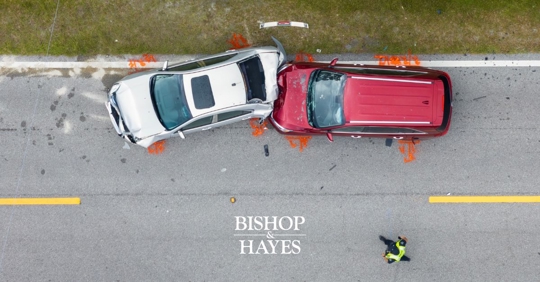
One moment, your family member is driving home, the next, you are being told that a “two-vehicle accident” or “single car crash” took their life and that one driver is to blame. You look at the police report and see only one name circled or one insurance company listed. It can feel like the story is already written, long before you have had a chance to ask how this really happened.
For many families in and around Springfield, that is where the confusion begins. The crash may have involved a semi truck, a company vehicle, a rideshare, or a drunk driver coming from a bar, yet everyone seems focused on just one person behind the wheel. You may be wondering whether anyone else can be held accountable, and whether there is anything more you can do to protect your family’s future after such a devastating loss.
At Bishop & Hayes P.C., we have spent decades focused on auto collisions throughout Missouri and neighboring states, including wrongful death cases with several defendants and multiple insurance companies. Our attorneys bring nearly 50 years of combined experience, including years working on the insurance defense side, so we understand how insurers decide who they will accept responsibility for and who they will try to leave out. In this guide, we explain how one fatal crash can lead to claims against several different parties, and what that can mean for your family’s wrongful death case in the Springfield area.
When multiple parties share responsibility for a wrongful death, accountability matters. Work with an attorney who knows how to pursue every liable party. Call (417) 304-3228 or contact Bishop & Hayes P.C. today.
Why One Fatal Crash May Lead to Several Defendants?
Many families initially believe a wrongful death case involves only one at‑fault driver because of how crashes are reported and discussed. In reality, the law recognizes that multiple people or companies may contribute to a single fatal crash, and each may be named as a defendant in a wrongful death lawsuit.
Key reasons a single fatal crash may involve multiple defendants include:
- Multiple sources of negligence: A crash may involve a speeding driver who was working for an employer, operating a poorly maintained vehicle, or traveling through a hazardous work zone.
- Employer responsibility: When a driver is on the job, the employer may share responsibility for the driver’s actions.
- Vehicle maintenance failures: Companies responsible for maintaining brakes, tires, or other critical systems may contribute to the cause of a crash.
- Unsafe road conditions: Contractors or entities responsible for construction zones, signage, or traffic control may bear part of the fault.
- Comparative fault principles: Courts and insurers may assign percentages of fault to each person or entity involved, rather than placing all responsibility on one driver.
This matters for families because pursuing only the most obvious defendant can leave out parties with higher insurance limits or greater ability to pay fair compensation. It can also allow insurers to shift blame to absent parties, weakening a claim. Because Bishop & Hayes P.C. focuses exclusively on auto injury cases, we are accustomed to looking beyond crash reports to identify where responsibility truly lies.
Common Multi-Defendant Scenarios in Springfield Wrongful Death Cases
Families in the Springfield area often believe a fatal crash involved only one responsible party. After closer review, many learn that multiple people or companies may share responsibility. While every case depends on its facts, these common scenarios show how one crash can lead to several defendants.
Situations that frequently involve multiple defendants include:
- Multi‑vehicle crashes: Chain‑reaction collisions on I‑44, weather‑related pileups on U.S. 65, or rear‑end sequences on busy city streets may involve several drivers who each contributed through different mistakes.
- Commercial vehicle accidents: Crashes involving trucks, delivery vans, or company cars may implicate the driver as well as the trucking or delivery company, hiring and training practices, scheduling decisions, maintenance programs, or third‑party maintenance providers.
- Freight and logistics involvement: In some commercial crashes, freight brokers, shippers, or contractors connected to the load or route may also share responsibility.
- Alcohol‑related crashes: A drunk driver may be a primary defendant, but depending on state law and where alcohol was served, a bar, restaurant, or other business may also face liability through dram shop‑type claims.
In these cases, responsibility is often evaluated using comparative fault principles, where different parties are assigned percentages of blame. Identifying every responsible defendant matters because it can affect available insurance coverage and prevent insurers from shifting blame to parties who are not part of the case.
When Drivers and Employers Share Responsibility
Any time your loved one was hit by someone driving for work, there is a strong chance that both the driver and the employer can be held responsible. This includes big rigs and delivery trucks, but also salespeople in sedans, utility vehicles, and sometimes rideshare or app-based delivery drivers. The legal idea here is often called vicarious liability. In plain terms, if an employee causes a crash while doing their job, the employer can usually be made to answer for that harm as well.
Beyond that, employers can face direct claims for what lawyers call negligent hiring, training, or supervision. For example, if a company puts a driver with a known history of drunk driving behind the wheel of a loaded tractor-trailer, fails to train them properly, or pressures them to ignore hours of service rules, those decisions can form the basis of separate negligence claims. The result is that both the driver’s actions and the company’s choices can bring them into your family’s wrongful death case. Our experience with trucking and commercial vehicle cases across Missouri has shown us how often employer decisions sit in the background of a crash that at first looks like a simple driver error case.
Less Obvious Defendants that Families Often Overlook
Families often recognize that a driver or employer may share responsibility after a fatal crash, but some of the most important defendants are not behind the wheel. These parties rarely appear in police reports, and insurers have little reason to highlight them, which makes a thorough legal and technical investigation essential.
Less obvious defendants that may play a role in wrongful death cases include:
- Vehicle owners (negligent entrustment): When someone allows a person they know is unfit to drive—such as a driver with recent DUIs—to use their vehicle, the owner’s decision can create separate liability alongside the driver.
- Product manufacturers and component suppliers: Defective tires, airbags that fail to deploy, or fuel systems prone to ignition can turn a survivable crash into a fatal one and may bring manufacturers or suppliers into the case.
- Maintenance and inspection companies: Businesses responsible for vehicle upkeep or safety inspections may share fault when mechanical failures contribute to a crash.
- Road contractors and public entities: Poorly marked construction zones, missing signage, dangerous drop‑offs, or faulty traffic signals can contribute to fatal collisions.
- Government agencies or contractors with special rules: Claims involving public entities often have unique notice requirements, shorter deadlines, and damage limits that vary by state.
These cases often require engineering analysis, accident reconstruction, and close review of design documents, recall histories, contracts, and safety records. Because rules differ across Missouri, Oklahoma, Kansas, and Arkansas, identifying these less obvious defendants early can be critical to preserving claims and ensuring all responsible parties are held accountable.
How Fault and Damages Are Divided Among Multiple Defendants
Once it is clear that more than one party may be responsible, the next issue is how financial responsibility is divided. In many wrongful death cases, multiple defendants actually increase the chances of full recovery by creating additional sources of insurance coverage.
How fault and damages are handled in multi‑defendant cases generally includes:
- Comparative fault allocation: Each person or company involved may be assigned a percentage of responsibility rather than all fault being placed on one defendant.
- Division of damages: The total value of the wrongful death claim is determined once and then divided among defendants according to their share of fault, subject to state law and insurance limits.
- Multiple insurance policies: Bringing in employers, contractors, or companies often means access to higher insurance limits than a single driver’s policy.
- Joint and several liability considerations: In some situations, one defendant may be required to pay more than its share if others cannot, depending on state law and damage type.
Importantly, multiple defendants do not result in multiple recoveries for the same loss. The family’s damages are evaluated once and then allocated among the responsible parties. Because attorneys at Bishop & Hayes P.C. have experience on the insurance defense side, they are familiar with these strategies and how to counter them through careful evidence and case presentation.
Why Identifying Every Defendant Early Can Change the Outcome
Identifying every potential defendant is not something that can wait until the end of a wrongful death case. Evidence fades quickly, and companies that face potential liability often control the most important records. When we take on a fatal crash case in or around Springfield, one of our priorities is to determine who might share responsibility beyond the obvious driver and to secure the proof we need before it disappears.
Trucking companies may have electronic logging device data, dispatch records, maintenance logs, and onboard video that shed light on how a crash happened. Bars and restaurants may have receipts, surveillance footage, and employee statements related to alcohol service. Road contractors may have traffic control plans, work orders, and internal communications about how a construction zone was set up. If these parties are not promptly notified through preservation letters and, when needed, early legal action, key information can be altered or lost in the ordinary course of business.
At Bishop & Hayes P.C., our approach to wrongful death claims is proactive. We move quickly to review the crash scene, obtain and analyze the police report, speak with witnesses when appropriate, and consult with accident reconstruction professionals where the mechanics of the collision are in dispute. Our access to investigators, medical professionals, and technical experts allows us to build a detailed picture of what happened and who contributed to it. Rapid communication with you and your family is part of this process, so you understand what we are doing and why as the list of potential defendants becomes clearer.
What Families Can Expect in a Multi-Defendant Wrongful Death Case
Families can generally expect the following as the case moves forward:
- Centralized communication through our office: We investigate, gather records, identify responsible parties, and serve as your primary point of contact.
- One lawsuit naming multiple defendants: When the lawsuit is filed, all identified defendants are typically named together in a single wrongful death complaint.
- Separate insurers and defense teams: Each defendant may have its own insurance company and lawyer, but families do not deal with them directly.
- A structured discovery process: Document requests, written questions, and depositions are used to uncover what each defendant knew, did, and how their actions contributed to the death.
- Managed coordination and preparation: We track deadlines, handle communications, and prepare you for any testimony you may need to give.
- Possibility of partial settlements: Some defendants may resolve claims earlier than others while the case continues against remaining parties.
- Guidance at each decision point: We explain settlement offers, ongoing negotiations, and trial options so decisions are based on clear information, not pressure.
Because of the emotional toll these cases take, Bishop & Hayes P.C. structures its practice so families have direct access to experienced attorneys throughout the process. Partners Brad Bishop and Tim Hayes personally manage each case from start to finish, rather than handing it off as complexity increases. Families often tell us that this level of personal attention makes a meaningful difference when navigating a long process involving multiple defendants and insurers after a fatal crash.
How We Approach Multi-Defendant Wrongful Death Claims at Bishop & Hayes P.C.
Wrongful death cases with multiple defendants demand a focused and coordinated strategy. Our firm is built around that need. Because Bishop & Hayes P.C. concentrates exclusively on auto injury and personal injury law, every system we use, and every relationship we have with investigators and reconstruction professionals, is aligned with the realities of serious crash litigation. That focus is particularly valuable when a fatal collision in the Springfield area involves commercial vehicles, multi-vehicle chains, or cross-border travel into Oklahoma, Kansas, or Arkansas.
Our attorneys’ background in insurance defense gives us insight into how carriers approach multi-defendant claims. We understand how insurers evaluate their own exposure, how they look for ways to shift blame onto others, and how they sometimes use staggered settlement offers to reduce what they pay overall. We now put that knowledge to work for families, structuring claims so that all responsible parties and all relevant layers of insurance coverage are part of the conversation as early as possible.
If your loved one’s life was taken in a crash that seems more complicated than a simple fender bender, you do not have to guess whether more than one party might be responsible. A detailed review of the facts, insurance information, and available records can reveal additional defendants and potential paths to accountability.
Call (417) 304-3228 or contact us to speak with our auto injury attorneys about a potential multiple defendant wrongful death claim.